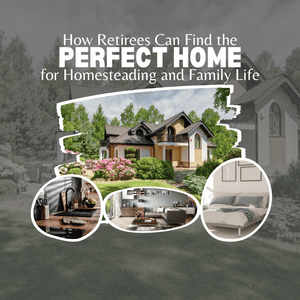
How Retirees Can Find the Perfect Home for Homesteading and Family Life

For retirees seeking larger homes so there’s room for homesteading hobbies and easy family visits, retirement home buying can feel like stepping against the current. Friends, headlines, and even well-meaning relatives push downsizing challenges, while the heart wants a garden, a workshop, and a table that actually fits everyone. The core tension is real: wanting more space without inviting budget fear or buying a place that becomes a burden. With the right focus, a bigger home can support daily life and keep independence intact.
Understanding the Right-Fit Homestead Home
The core idea is to decide from the ground up, using four anchors: your home buying budget, the land you can truly use, the indoor space you will live in daily, and the features that keep you safe and comfortable as you age. It is less about chasing a picture perfect “farm life” and more about choosing a home that supports your real routines.
This matters because extra space can quietly multiply costs and chores, and the wrong layout can turn a dream into daily strain. A clear framework keeps you focused on what improves independence, hosting, and simple homesteading wins.
For example, a big lot sounds ideal until you learn the buildable area is smaller than expected. And remember that homesteading doesn't always require owning land, so a smaller property with the right setup can still fit. With those decisions set, it helps to organize the paperwork so every comparison stays clean and stress-free.
Build a No-Panic Paper Trail with a Simple PDF System
Once you’ve identified what you need in a right-fit homestead home, the paperwork is where clarity can either hold, or unravel. Organizing your key documents in one consistent place, property deeds, seller disclosures, zoning regulations, and financing records, helps you move through the home-buying process without scrambling every time a question comes up. For retirees planning gardens, workshops, or regular family visits, having these records at your fingertips makes it easier to confirm what you’re allowed to do on the land, track what the property comes with, and spot potential deal-breakers before they turn into expensive surprises.
Saving everything as PDFs keeps files searchable, easy to compare side by side, and simple to share with a lender, agent, or family member when you need a second set of eyes. If you have documents in different formats, a file to PDF converter for free can help you standardize them quickly. With your paper trail under control, it’s much easier to stay calm as you shift into the affordability game plan before making an offer.
Follow This Affordability Game Plan Before You Make an Offer
Buying “a little more space” can quietly turn into paying for stress, especially on a retirement income. I like to treat affordability like a game plan: a few clear checkpoints that protect your budget and your homesteading hopes.
- Set a retirement-safe monthly number (then back into a price): Start with your total monthly “housing” cap, mortgage or rent, taxes, insurance, utilities, and a realistic maintenance line. Use your PDF system to keep one page per property that shows the same categories every time, so you’re comparing apples to apples. If a home needs a roof “soon” or the well report looks uncertain, add a monthly placeholder cost now; future-you will thank you.
- Compare financing like you’re choosing a long-term partner: Ask two or three lenders to quote the same purchase price and down payment on the same day and save each quote as a PDF in your folder for that address. Then compare rate, points, closing costs, required reserves, and whether the payment can jump later. If a large down payment is your barrier, some buyers use programs involving a second mortgage to make the upfront math workable, worth asking about if it keeps you from draining emergency savings.
- Shop the retiree-friendly market pockets where land is realistic: Instead of widening your budget, widen your map. Pick 2–3 target zones where you can still find homes with usable land, often 20–45 minutes outside a job center, or in smaller towns with decent clinics and reliable internet. Track sale-to-list price, days on market, and property tax ranges in a simple spreadsheet; those three numbers tell you whether you’ll need aggressive offers or patient ones.
- Score each property for homestead suitability before you fall in love: Walk the lot with a short checklist: sun exposure, slope and drainage, access for deliveries, and where water and power run. Inside, look for “convertible” rooms, an oversized laundry, a dining room that could become a playroom, or a garage bay that could become a workshop with ventilation. Put your checklist in the property’s PDF folder so your excitement doesn’t erase your standards.
- Negotiate with precision, not bravado: If the inspection shows issues, ask for one of three things: a price reduction, seller-paid closing costs, or repairs completed by licensed pros. Tie each request to a line item you already documented, inspection page, estimate, disclosure, so it feels factual, not emotional. This approach keeps your affordability plan intact without picking a fight.
- Protect your cash cushion with “right-size” contingencies and timelines: Keep inspection and financing contingencies long enough to do real due diligence, especially for septic, well, and roof. If you need space for visiting family, negotiate for possession timing that lets you move and set up safely, not frantically. A calm timeline is part of affordability because rushed decisions are expensive.
Homesteading Home Q&A Retirees Ask Most
Q: What zoning rules could block my homesteading plans?
A: Start by asking what’s allowed for animals, outbuildings, fences, and home-based sales, not just “Is it rural?” Even in the country, restrictive zoning can limit farming-style activities that don’t fit neat residential labels. Call the county planning office and request the exact written sections that apply to your parcel.
Q: How do I know a larger place is truly affordable on retirement income?
A: A bigger home is only “affordable” if you can cover repairs, rising taxes, and higher utilities without dipping into emergency savings. Price the lifestyle, not just the mortgage, by estimating annual maintenance and budgeting for replacements like wells, roofs, and driveways. If the numbers feel tight, scale back acreage or prioritize a smaller, more usable footprint.
Q: What home features make it easier to host kids and grandkids?
A: Look for flexible spaces you can close off, like a bonus room, den, or finished basement, so visits don’t overrun your daily routine. Two bathrooms, safe stair layouts, and a mudroom-style entry reduce friction fast. Outside, flat play space near sightlines beats “more land” that’s steep or wet.
Q: Should I plan for inflation when I budget for a homestead home?
A: Yes, because feed, utilities, insurance, and repairs tend to climb over time. Many planners use the assumption that most financial advisors model a long-term inflation rate between two and three percent annually. Build that into your monthly cushion so the home stays comfortable later, not just this year.
Q: Can we realistically live off the land, or is that a fantasy?
A: It can be realistic in pieces, and that is often the healthiest goal. Start with a “supplement plan” like eggs, a garden, and pantry storage, then expand only after you’ve lived through a full year of weather and routines. Choosing systems you can maintain comfortably matters more than chasing perfection.
Choose a Homesteading Home That Serves Family and Future
Wanting land, peace, and room for family can collide fast with budget limits, zoning realities, and the need for a home that won’t feel burdensome later. The steady way through is a values-first mindset: weigh the tradeoffs, prioritize family-focused home design and daily livability, and treat the property as a long-term home investment rather than a short-lived project. When that approach guides decisions, retiree home buying confidence grows, and the homesteading lifestyle benefits become practical, more shared meals, useful work outdoors, and space for visiting loved ones. Buy the home that supports your life, not the life that strains to support the home.
- Home Staging Warehouse